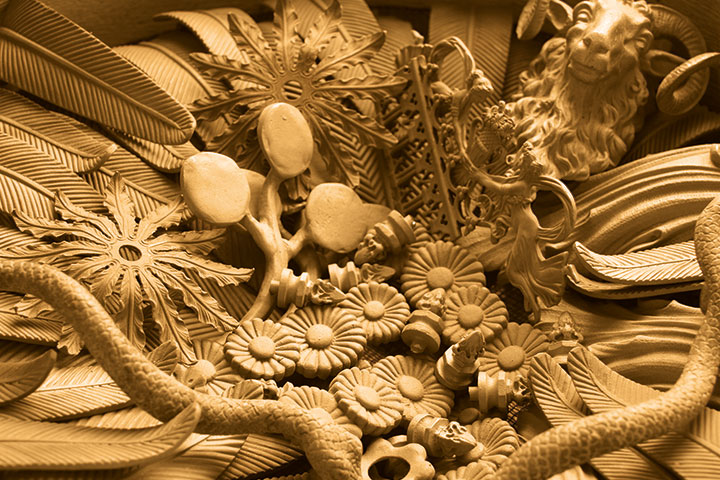
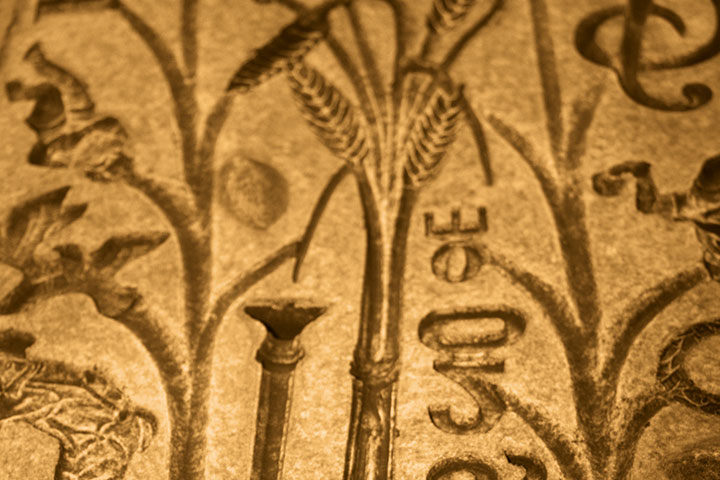
The lost wax process enables us to cast precised bronze pieces.
The model being reproduced is molded in silicone rubber in order to obtain an exact print of the original model.
The hollow of print is then filled with wax to obtain a reproduction of piece.
The pieces in wax are then assembled together within a steel cylinder filled with refractory plaster before being placed into an oven.
Once heated, the wax melts leaving the imprint of the original piece.
The metal can then be casted in the prints.
The lost wax process is applicable in a number of areas such as decorative hardware, sculpture and jewellery.


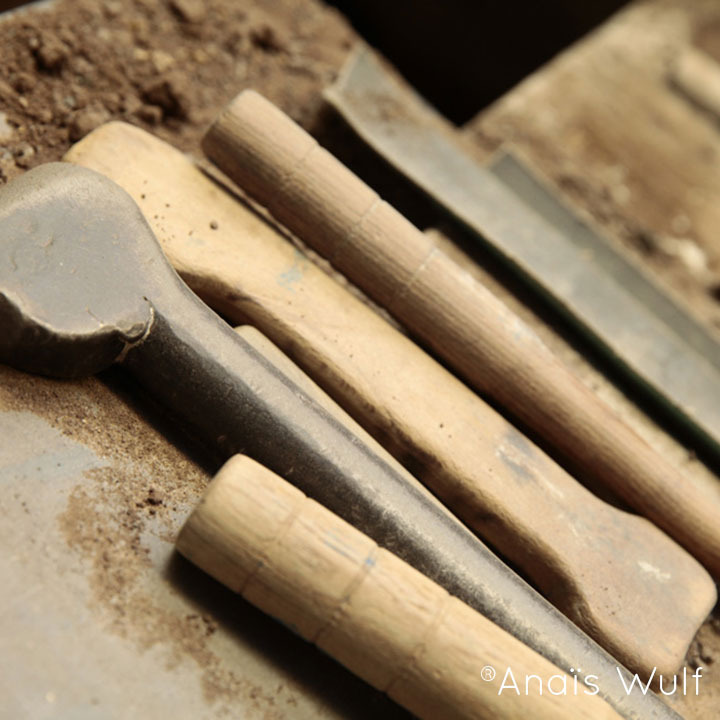
We use 2 different types for sand casting : the natural sand clay and chemical sand mixture.
Natural sand clay is used for the models of high definition, the molds are heat dried before being casted and the sand is recycled.
Chemical sand is mainly used for larger pieces, this process requires a mix of resin and a catalytic agent.
This process allow us the reproduction of monumental sculptures mainly casted in bronze and brass.
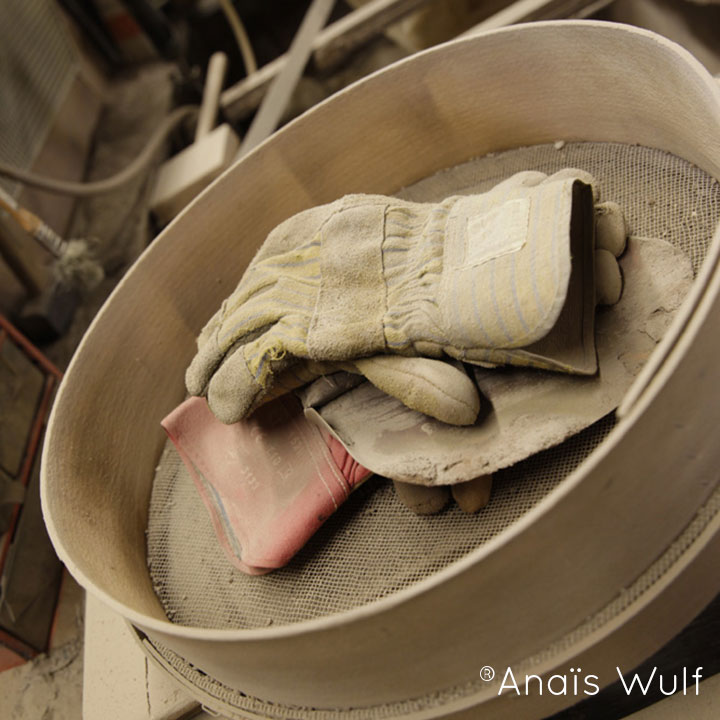
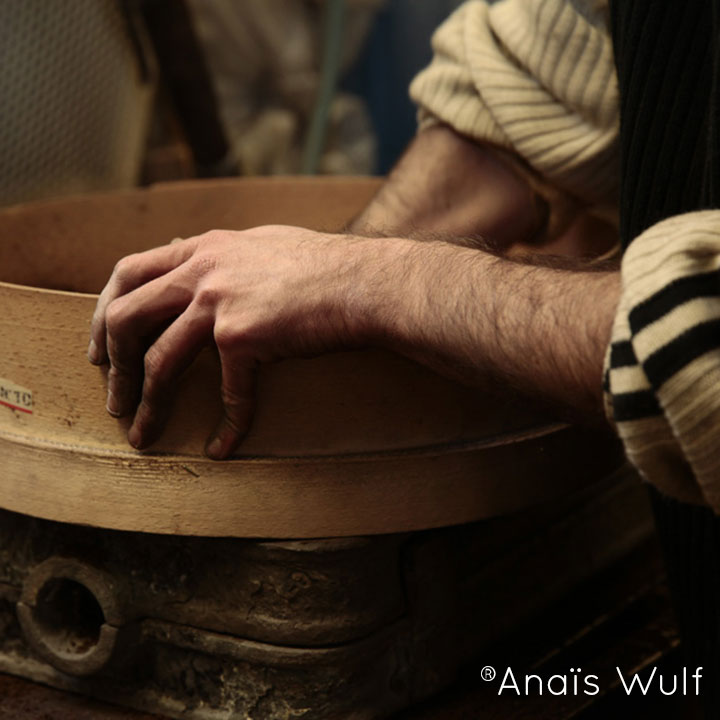
The sand is sieved and compacted around the model in a steel frame.
When the piece is too voluminous, an inner core is required inside the mold and the wall thickness of the sculpture is adjusted.
The master model is extracted from the mold which is then heat dried in an oven, ready to be casted.


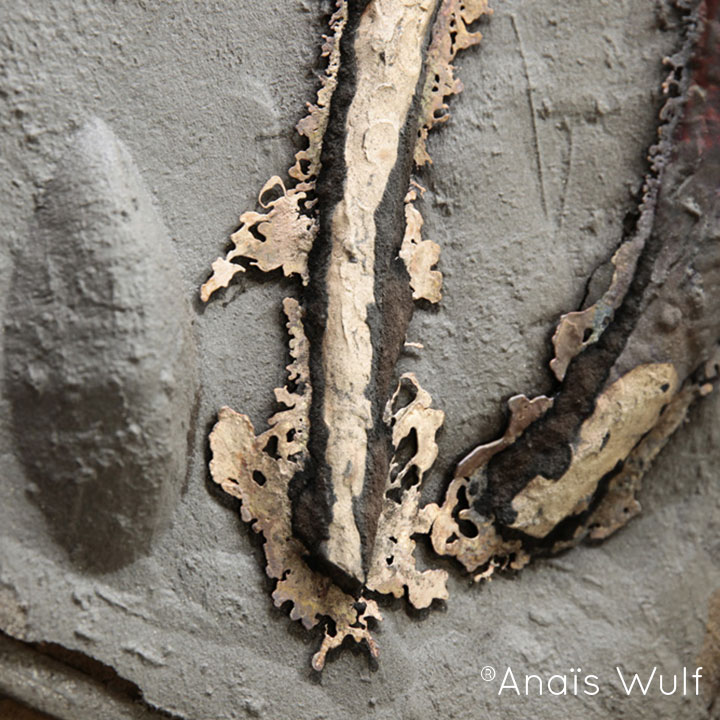
A spruing systematic approach is set in the mold to be able to feed the piece being created with metal, once casted the bronze piece is then removed from the mold.
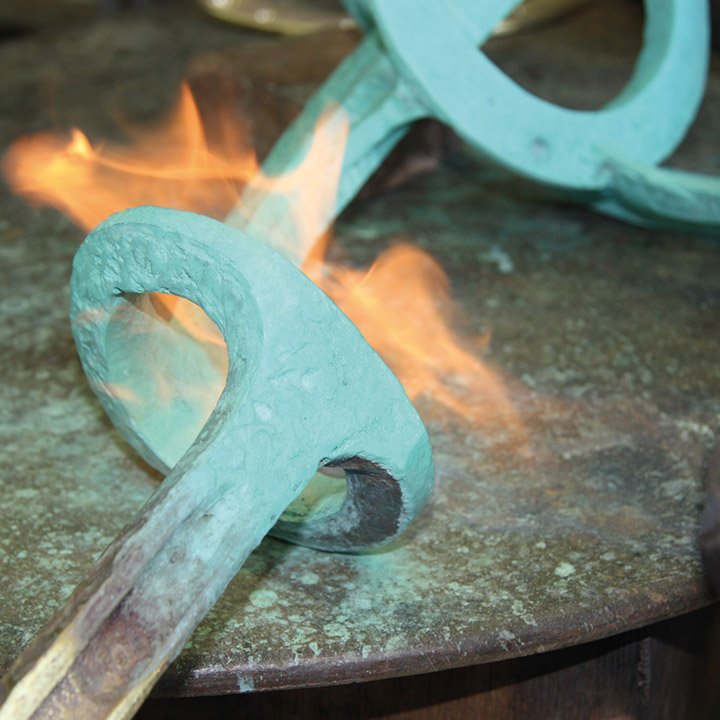
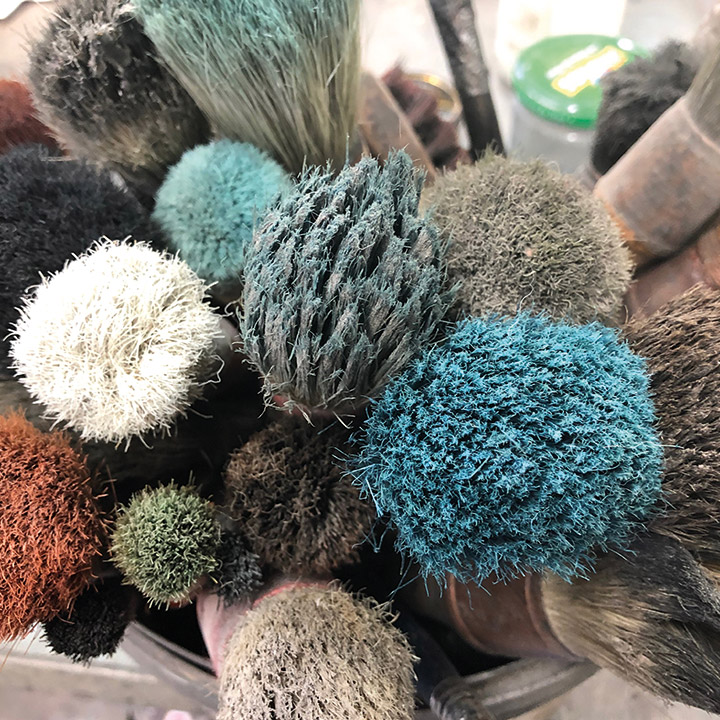
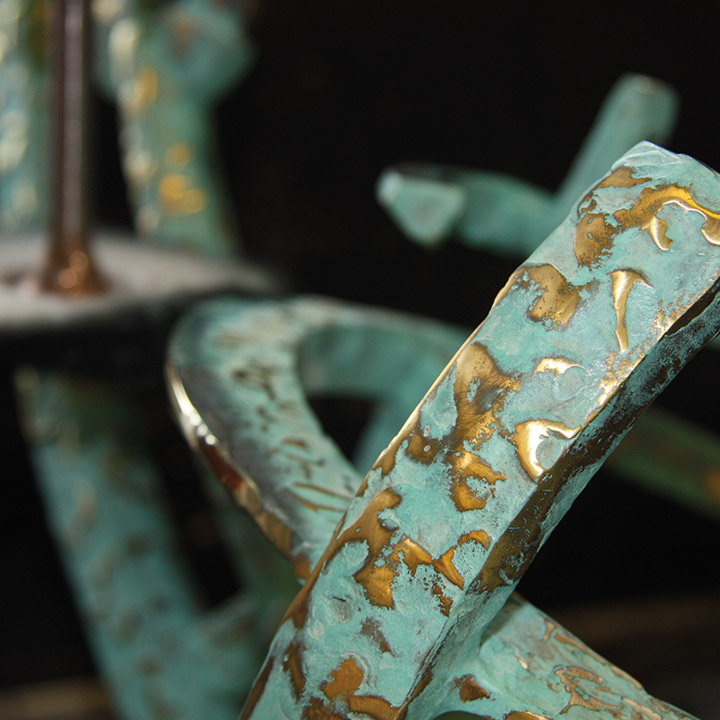
This consists of fettling, chasing and patinating. This work starts from the withdrawal of the bronze sprues up to the machining of the casted pieces.
These stages are necessary to prepare the pieces for polishing or patinating.
The completion also consists of assembling the different elements previously prepared, chased and fettled together by welding, to complete the finished product.